Saura's B2B Go-to-Market Strategy
A real client case: how we turned an SAP consulting and supply-chain technology business into one coherent go-to-market strategy built on buying signals, not job titles.
What's inside
- Two buying moments, one strategy
- Business signals over job titles
- 300 priority accounts
- Media as the execution layer
01
The client and the challenge
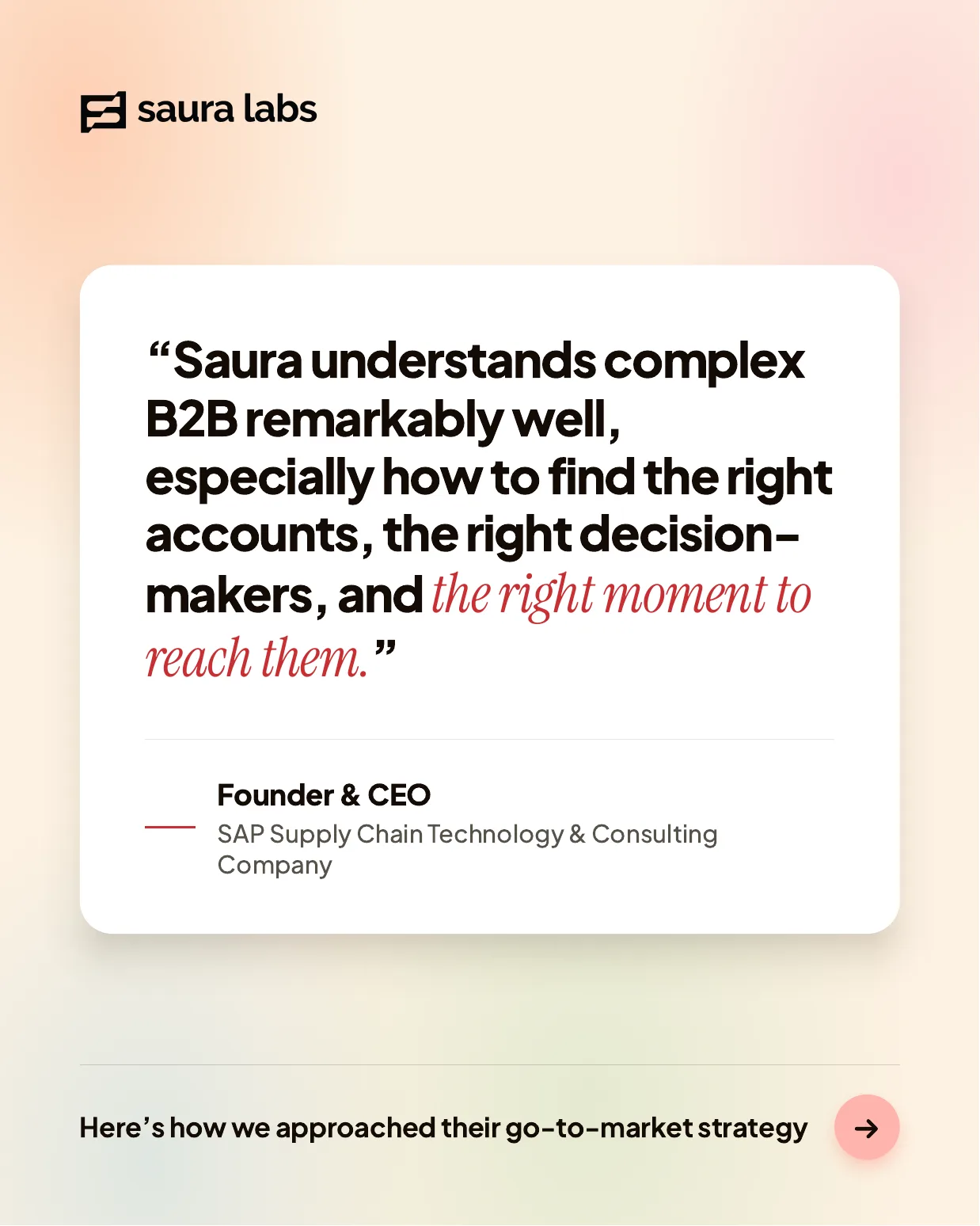
A founder and CEO of an SAP supply chain technology and consulting company told us: "Saura understands complex B2B remarkably well, especially how to find the right accounts, the right decision-makers, and the right moment to reach them." Here is how we approached their go-to-market strategy.
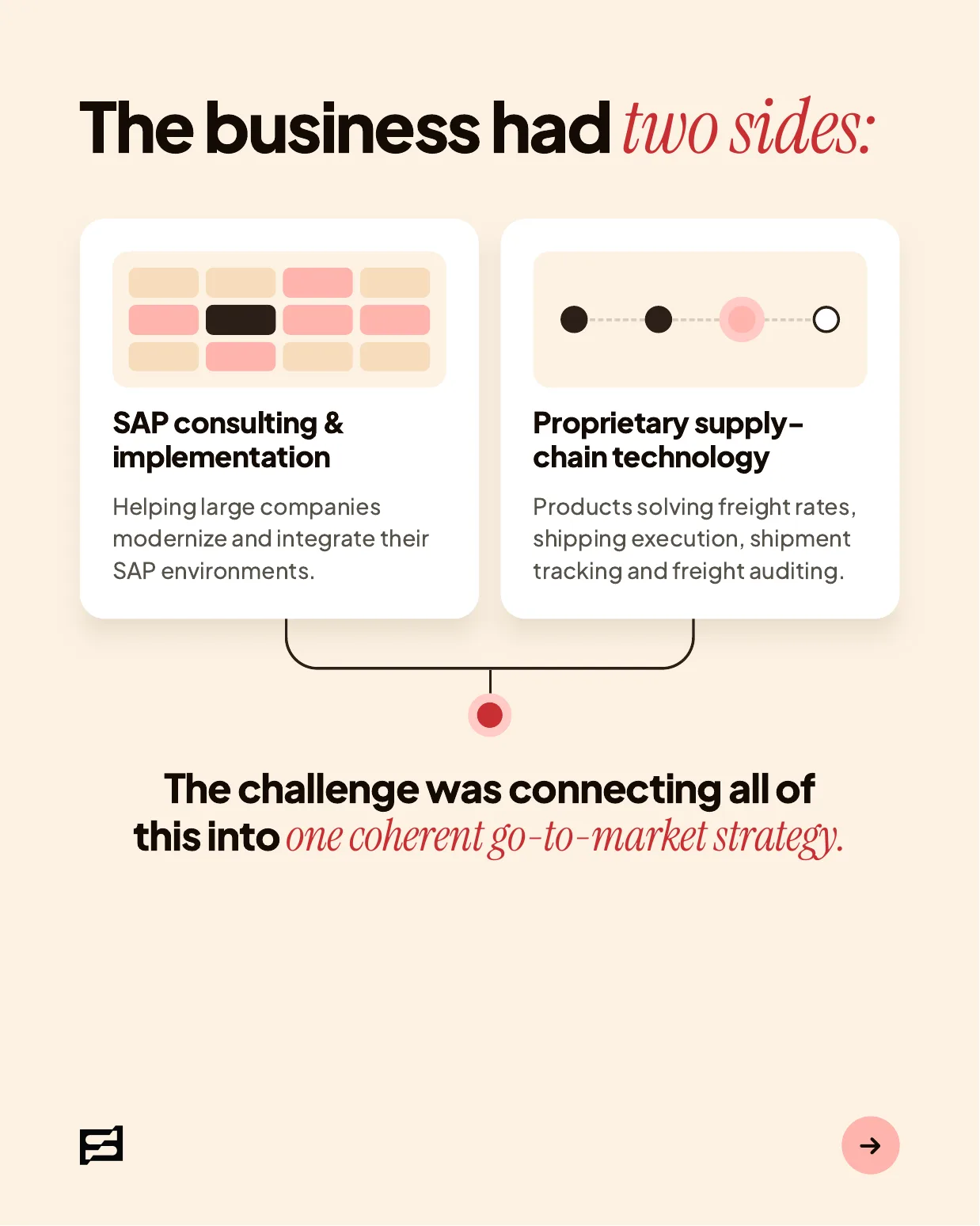
The business had two sides. On one side, SAP consulting and implementation: helping large companies modernize and integrate their SAP environments. On the other, proprietary supply-chain technology: products solving freight rates, shipping execution, shipment tracking and freight auditing. The challenge was connecting all of this into one coherent go-to-market strategy.
02
Two fundamentally different reasons to buy
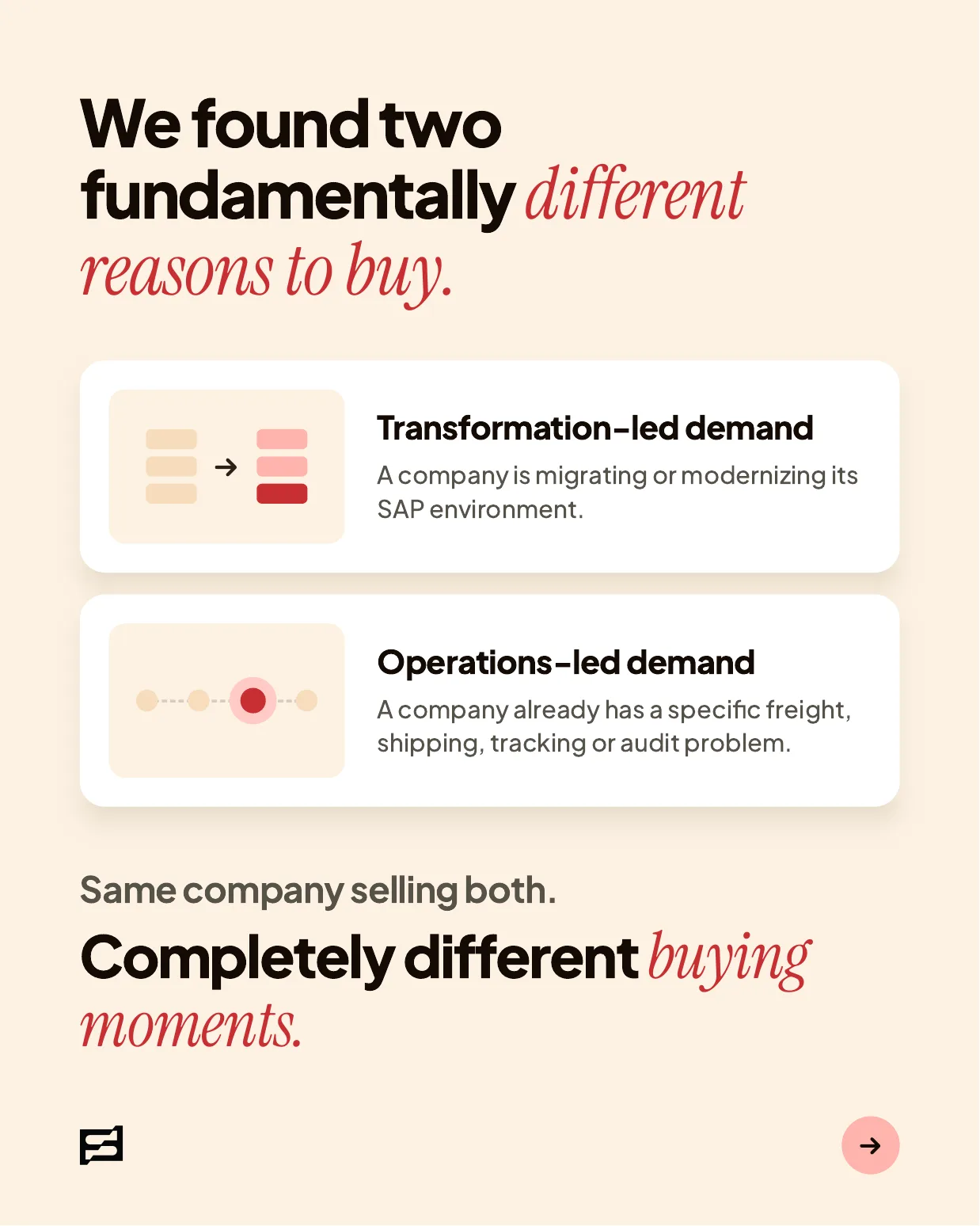
We found two fundamentally different reasons to buy. Transformation-led demand: a company is migrating or modernizing its SAP environment. Operations-led demand: a company already has a specific freight, shipping, tracking or audit problem. Same company selling both — completely different buying moments.
The two buying moments
- Transformation-led demand: SAP migration or modernization underway.
- Operations-led demand: a live freight, shipping, tracking or audit problem.
03
Identify needs before the vendor search begins
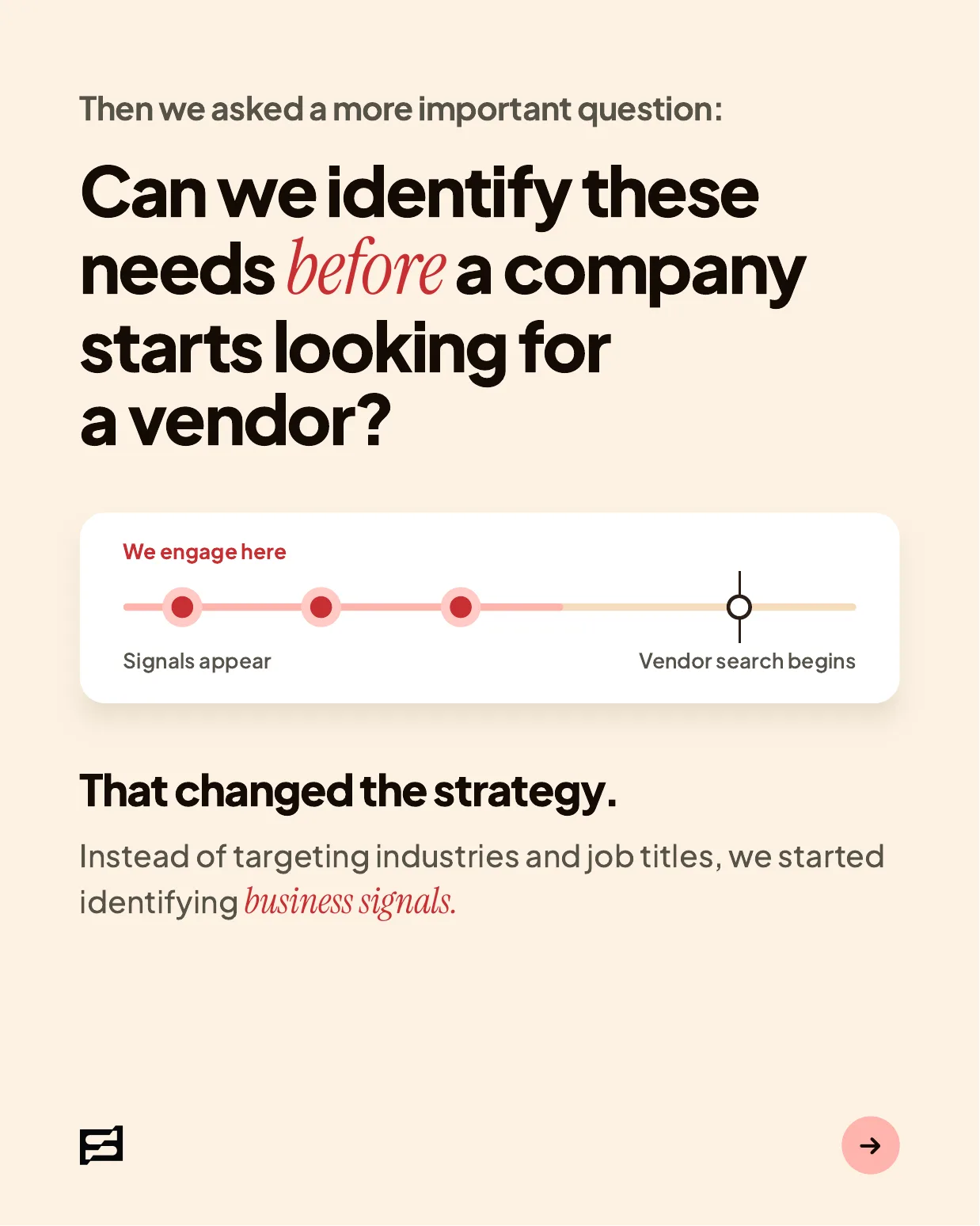
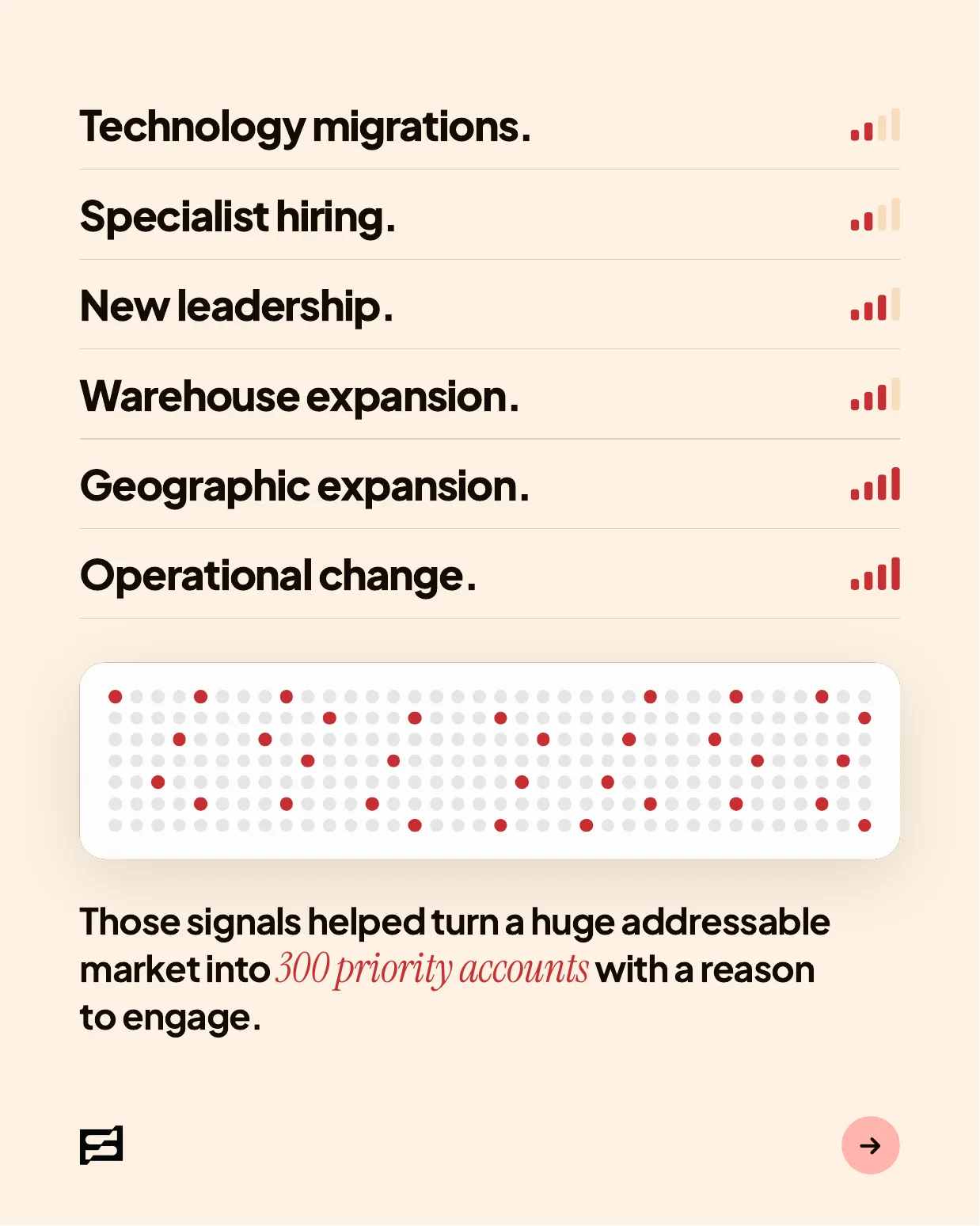
Then we asked a more important question: can we identify these needs before a company starts looking for a vendor? That changed the strategy. Instead of targeting industries and job titles, we started identifying business signals — and engaging when those signals appear, before the vendor search begins.
Those signals helped turn a huge addressable market into 300 priority accounts with a reason to engage.
The business signals
- Technology migrations
- Specialist hiring
- New leadership
- Warehouse expansion
- Geographic expansion
- Operational change
04
Map the buying committee
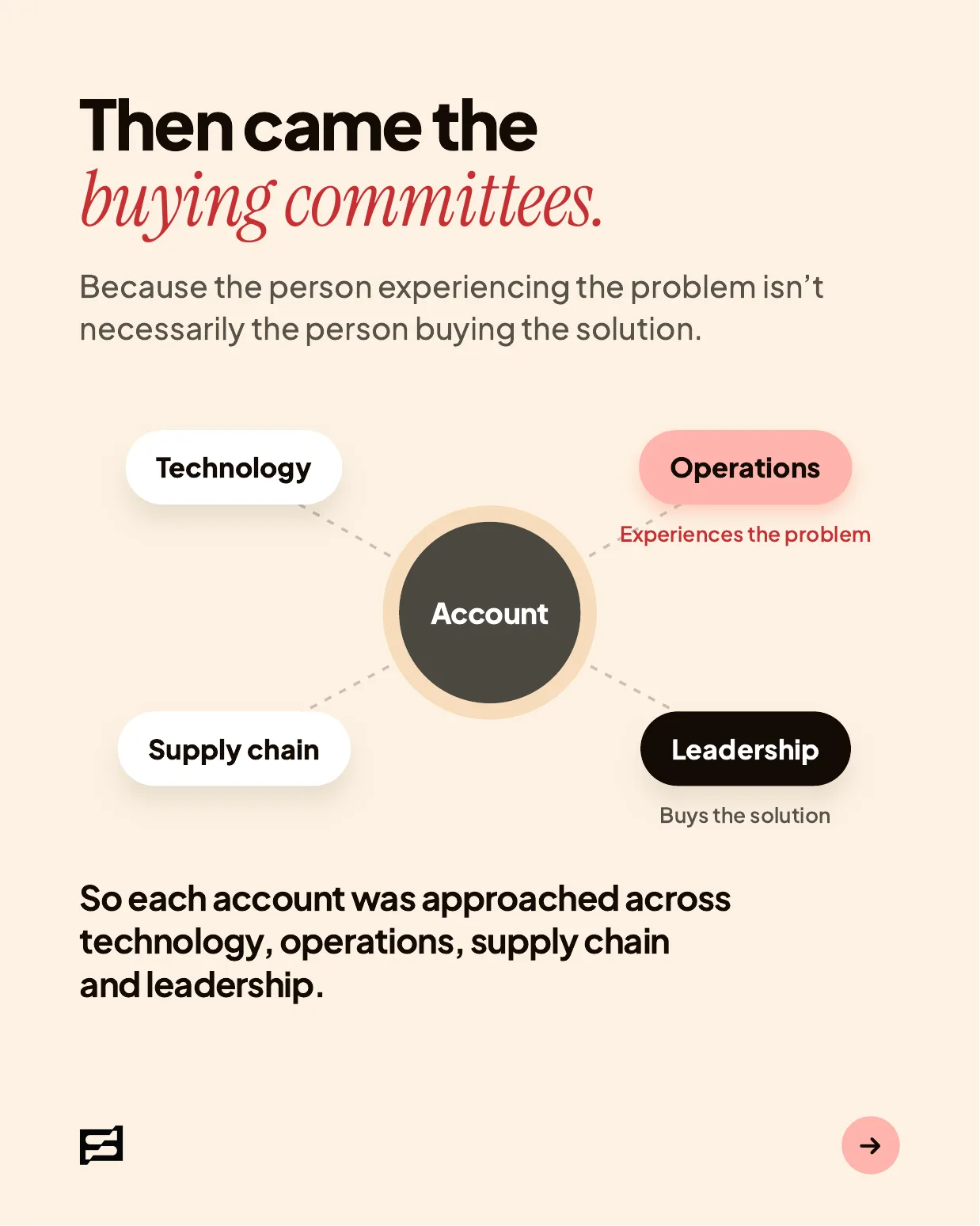
Then came the buying committees. The person experiencing the problem isn't necessarily the person buying the solution. Operations experiences the problem; leadership buys the solution. So each account was approached across technology, operations, supply chain and leadership.
Who each account was approached across
- Technology
- Operations — experiences the problem
- Supply chain
- Leadership — buys the solution
05
Media is the execution layer, not the strategy
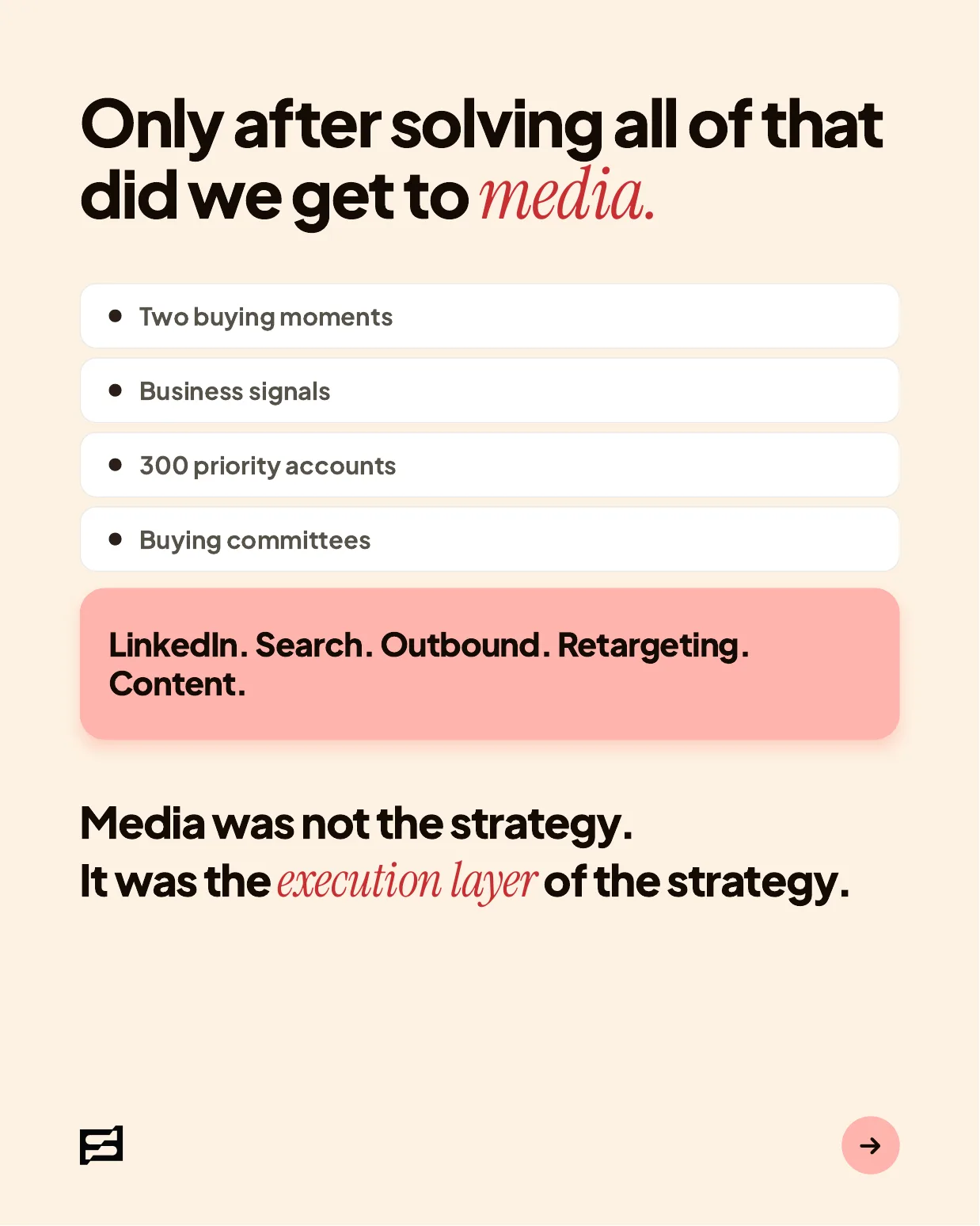
Only after solving all of that did we get to media: two buying moments, business signals, 300 priority accounts and buying committees. Then LinkedIn, search, outbound, retargeting and content. Media was not the strategy. It was the execution layer of the strategy.
The execution layer
- Search
- Outbound
- Retargeting
- Content
06
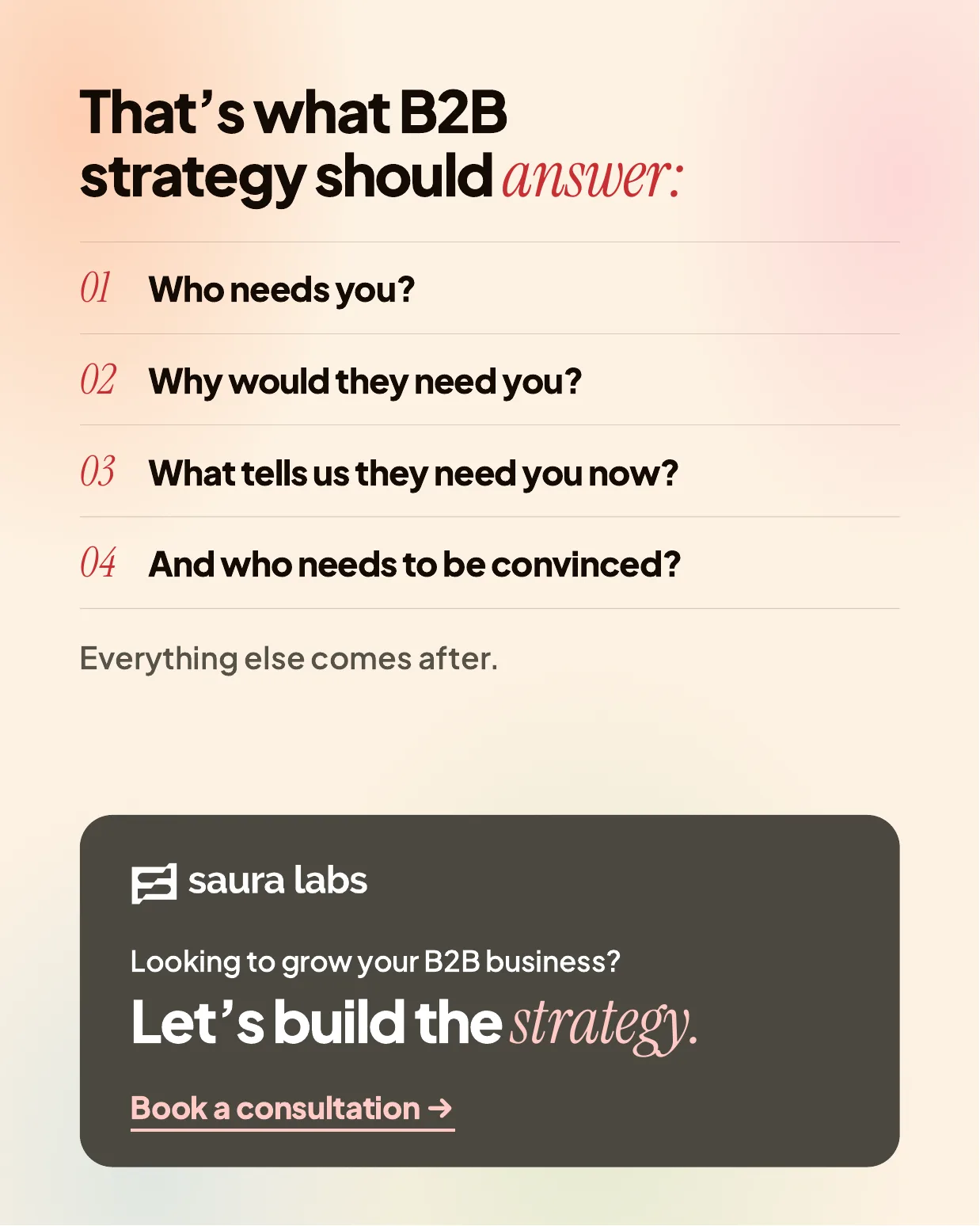
What B2B strategy should answer
That's what B2B strategy should answer. Everything else comes after. Looking to grow your B2B business? Let's build the strategy — book a consultation.
The four questions
- Who needs you?
- Why would they need you?
- What tells us they need you now?
- And who needs to be convinced?
Keep this guide for your team.
Get the designed PDF, free.
Want this built for your brand? Book a 30-minute strategy call.